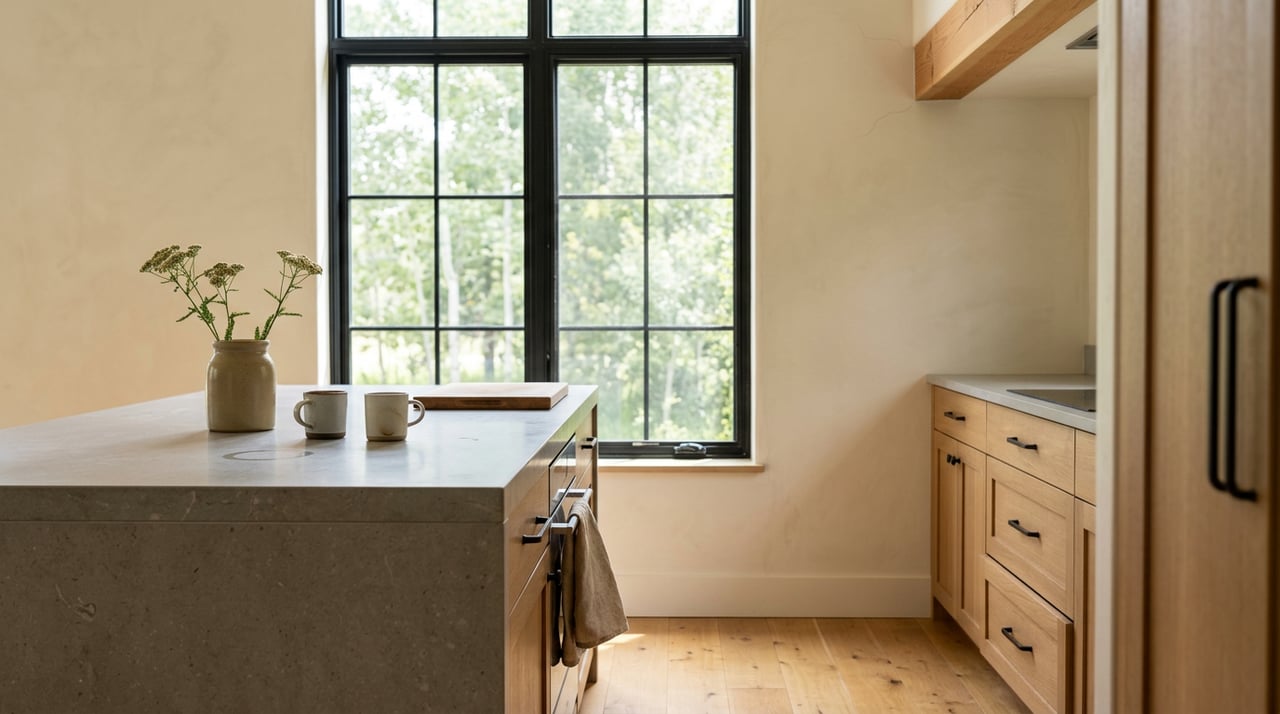
Summer in Silver Springs is easy to remember because it is built into the ordinary parts of the day.
The neighborhood lakes, a morning coffee at Park City Gardens, the path toward Willow Creek Park, and a longer ride beside McLeod Creek do not need to be assembled into an itinerary. They already fit together. One stop leads naturally to the next, and a short outing can remain short or open into a much larger loop through Park City.
That is the defining feature of a Silver Springs Park City summer: the neighborhood has a clear handoff from private gathering spaces to public recreation. Understanding that distinction makes the area easier to enjoy and explains why the season feels less like a series of special occasions and more like an established rhythm.
Summer begins with a boundary locals understand
Silver Springs has amenities that can look public from a distance but are not. The Silver Springs Master Association states that its lakes, parks, and tennis courts are reserved for association members and their families or guests.
That private structure shapes the quietest part of summer here. Time near the water, a neighborhood tennis match, or a picnic at the big-lake park can happen close to home, but access remains controlled by the association.
There are practical details behind the ease:
- Association members may use the lakes under current Master Association rules.
- Watercraft storage is seasonal, and stored equipment must be registered.
- The association identifies two launch and storage areas.
- The big-lake park pavilion can be reserved through the Master Association on a first-come, first-served basis.
- Pavilion groups need to plan for suitable trash collection because the regular park bins are not designed for larger gatherings.
These are small distinctions, but they matter. Silver Springs is not a place where every patch of water or green space follows the same rules. Residents and guests should confirm current association policies before planning lake access, equipment storage, or a gathering.
| Setting | Access | Practical distinction |
|---|---|---|
| Silver Springs lakes, parks, and tennis courts | Association members and their families or guests | Private common areas governed by current association rules |
| Willow Creek Park | Public, dawn to dusk | Public recreation with park-specific rules |
| Willow Creek Park Pond | Public park feature | People may not swim or float; seasonal dog use is allowed |
That last distinction is particularly useful. The neighborhood lakes and the pond at Willow Creek Park are different recreational settings with different rules. Treating them as interchangeable misses one of the details residents learn quickly.
At Willow Creek Park, the day becomes public
Willow Creek Park is the public counterpart to the private common areas in Silver Springs. The 17.5-acre park at 4460 Split Rail Lane is open from dawn to dusk, giving the neighborhood a place where an informal afternoon can take several forms without much planning.
The park includes playing fields, pavilions, multi-use paths, protected open space, an exercise course, a dog park, and an all-abilities playground completed in 2023. Its courts include two for tennis, eight for pickleball, two for sand volleyball, and one for basketball.
Most of those courts operate on a first-come, first-served basis. Tennis reservations are available seasonally. That arrangement encourages a flexible kind of use: stop for a game if a court is available, continue along the path if it is not, or meet at the playground and decide from there.
The pond has its own purpose. People are not permitted to swim or float in it. The water comes from natural surface sources and is also used for summer irrigation. Dogs may use the pond seasonally, and Basin Recreation monitors the water.
This is where local familiarity becomes useful. A summer day near the water may mean private lake access under Master Association rules, or it may mean a public walk with a dog at Willow Creek Park. The settings are close in character but distinct in use.
The pathway is what makes the neighborhood feel larger
Willow Creek Park is more than a collection of amenities. It is a starting point.
Basin Recreation’s beginner-rated City Tour begins at the park and follows the Willow Creek Trail for 1.7 miles. It then continues for 2 miles along McLeod Creek, crossing bridges and passing through open areas before joining more of Park City’s pathway network.
Those first 3.7 miles explain much of the neighborhood’s summer cadence. A walk or ride can stay close to Willow Creek, or it can continue outward without requiring an entirely new plan.
The full City Tour covers 15.4 miles and connects:
- Willow Creek Trail
- McLeod Creek
- Olympic Parkway
- Park City Parkway
- The Rail Trail
- Quinn’s Junction
- Silver Quinns
- Highland
- Redstone
- Swaner Preserve & EcoCenter
- East 224 Connector
Basin Recreation classifies the complete route as beginner and identifies its sections as commuter pathways. That makes the loop relevant to more than a dedicated trail day. It can support a longer morning ride, a practical connection between parts of town, or a familiar route divided into shorter sections.
The maintenance behind that experience is easy to overlook. In spring 2026, Basin Recreation added rocks along the edges of the Willow Creek Park trail to reduce wear from water and foot traffic. It was a modest project, but it speaks to the larger point: these are not incidental tracks across open ground. They are maintained parts of everyday neighborhood life.
The McLeod Creek Pathway is also the subject of planned capital work. Park City’s fiscal year 2026 materials budgeted $568,940 for design and construction associated with replacing two aging bicycle and pedestrian bridges. The stated goals included wider structures, improved visibility, gentler approaches, better connectivity, and enough width for winter plowing.
The budget described the project as expected to begin in fiscal year 2026 rather than confirming that work was complete. Residents planning a longer route should check current conditions before leaving. The broader significance is clearer: Park City is treating this pathway as year-round infrastructure, not simply a fair-weather amenity.
Familiar stops give the route its character
A connected path system is useful. The places along it are what turn repeated use into a neighborhood routine.
Park City Gardens at 4459 North Highway 224 is one of those places. The historic property is open year-round and includes the Garden Boutique, Flower Barn, workshops, and a nursery and bulk yard that operate during the April-through-December planting season.
The Garden Cafe, greenhouse, and outdoor garden areas make it possible to combine a coffee stop with time among the plants. In summer, that pairing feels especially natural. A quick errand can become a slower morning without requiring a formal reservation or a trip to Main Street.
Farther into the connected pathway system, the surroundings broaden. A route along McLeod Creek can bring McPolin Farm, Copper Moose Farms, the Osguthorpe farm field, and Swaner Preserve into the same outing. Creeks, bridges, agricultural land, and the McPolin Barn give the ride a sequence of recognizable local markers.
That sequence is more important than any single destination. Silver Springs does not need every summer experience to sit within its subdivision boundaries. Its advantage is the way the neighborhood opens into nearby public paths, farms, preserved land, and community spaces.
One August afternoon makes the thesis visible
The clearest example arrives on August 22, 2026.
Art on the Trails is scheduled from 2 to 6 p.m., beginning at Copper Moose Farm Stand at 1285 Old Ranch Road. The event uses the McLeod Creek Trail between Copper Moose Farm Stand and Temple Har Shalom, bringing visual art, performances, food, refreshments, and music into a setting many residents already know through ordinary walks and rides.
Willow Creek Park is the recommended parking location. That detail ties the event directly back to the neighborhood’s public recreation hub.
Art on the Trails works because it does not require a new venue to create a cultural afternoon. It changes the way people experience an existing route. A familiar path becomes an open-air performance space for a few hours, then returns to its daily role.
That is also why Basin Recreation’s 13th annual Movie in the Park and Backyard Campout belonged so naturally at Willow Creek Park on July 10 and 11, 2026. The event included yard games, stargazing, a screening of The Parent Trap, and an overnight campout. It has already taken place this year, but its return as an annual program shows how the park supports both routine recreation and larger community traditions.
A practical 2026 park note
From July 30 through August 1, the Extreme Cup Soccer Tournament is scheduled to affect Willow Creek Park and several other Basin Recreation facilities. Park amenities are expected to remain open except for affected fields, though residents may encounter limited parking and heavier congestion.
For those dates, the better plan may be to arrive by path when practical, adjust the timing of a court visit, or choose another section of the connected trail system.
What remains after summer
The Silver Springs summer that stays with the neighborhood is not one concert, one picnic, or one long ride. It is the pattern connecting them.
Private common areas create one kind of summer morning. Willow Creek Park provides public space for courts, paths, play, and time outside. The Willow Creek and McLeod Creek routes extend that daily radius toward farms, preserved land, and the broader Park City pathway network. Park City Gardens offers a natural pause, while Art on the Trails briefly turns a familiar route into a cultural venue.
When the season changes, much of that underlying structure remains. Basin Recreation identifies the City Tour as accessible throughout the year, and the planned McLeod Creek bridge work specifically considers winter plowing and year-round connection.
That continuity may be the most accurate explanation for why summer never fully leaves Silver Springs. The activities change, but the map of daily life does not disappear.
If you would like a thoughtful conversation about Silver Springs, Park City, or the Wasatch Back, I would be glad to share the local context and practical guidance that matter for your next decision. Let’s Connect.