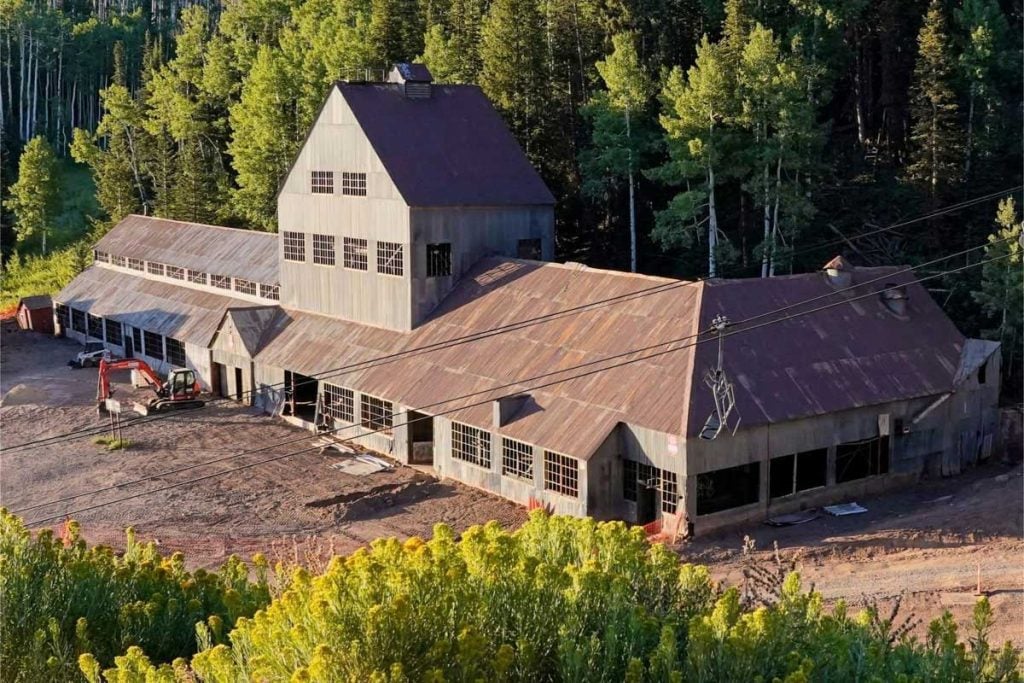
The Park Record reported on the Silver King Mine and quoted Colleen Logan, public relations and marketing director for the Friends of Ski Mountain Mining History: "The mine shut down in 1953 and that building had been left untouched." The mine is a wood and tin structure that has sat above town for more than seventy years while ski runs and staircases grew up around it. No open house. No tour. Just a building slowly losing an argument with weather.
That changes this year. On Monday, September 7, the all-volunteer committee is unveiling a new seven-mile Historic Mine Route that begins on Main Street, and the restored Silver King is the reason the loop exists at all. The restoration took four years, and the group has called it out plainly: the last four years were spent putting a building back together after decades of neglect. If you've lived here long enough to have your own theory about what those old timber frames on the hillside actually were, this is the year you get to check your work.
Search "Park City fall" and the hot air balloons come up first. Autumn Aloft is real and worth the early alarm. But if you already live here, balloons drifting over the Wasatch every September are not the thing you're waiting for. The thing you're waiting for is Miners Day, and this year it comes with something it hasn't had in a long time: a genuinely new place to walk.
Miners Day, 130 Years Running, One New Stop On The Map
Miners Day is the longest-running event in Park City, and 2026 marks its 130th year. It still runs the way a mining town's Labor Day should: a pancake breakfast, a parade, and a contest that involves actual drilling.
The morning has a rhythm locals already know, but this year's schedule has a few new stops worth building your day around:
- 7:30 to 9:30 a.m. Breakfast in City Park, hosted by Saint Mary's Catholic Church. Grab coffee beforehand at Pink Elephant Coffee Roasters or Atticus Coffee if you want to beat the crowd.
- 8 a.m. Bark City 5K, a fun run for you and the dog that benefits local animal organizations. Costumes encouraged.
- 10:30 a.m. Running of the Balls, the Park City Rotary Club's long-running fundraiser, where purchased golf balls get released down Main Street in a lottery-style roll to a funnel at the bottom.
- 11 a.m. The Miners Day Parade, opening with a flyover from the Utah Wing of the Commemorative Air Force.
- 12:30 p.m. Mucking and Drilling Competitions at City Park, judged with a rock hand-selected by the Rotary Club and donated by Mountain Valley Stone. It gets auctioned off afterward for community grants.
- All day. The new Historic Mine Route, open for the first time, starting from Main Street.
The Running of the Balls also has a new participation tier this year, the Big Ballers Club, running $375 for an individual or $550 for a couple. It buys a Silver Strike Ball with better odds, twenty regular balls, VIP access to a Big Baller Lounge hosted by The Cabin, food and drink tickets, and a shot at prizes that include a Deer Valley season pass. The Park Record quoted Park City Rotary Club event chair Kristin Wright:
"At the very end, there's a funnel and one single ball makes it first. That ball wins a prize. There are several dozen winners in the end."
The Loop That Finally Explains The Holes In The Hillside
The Historic Mine Route is not a plaque and a bench. It's a full seven-mile loop with about 1,200 feet of elevation gain, mixing paved trail with dirt, and it's built to be family-friendly rather than a technical push. The Park Record quoted Logan describing the concept:
"The Park City Historic Mine Route combines outdoor adventure with historic discovery on a route that begins on historic Main Street."
What makes it worth clearing a September morning for isn't the elevation profile. It's the layer of context that goes with it. The Friends of Ski Mountain Mining History have installed more than 100 interpretive signs along the route with help from the Mountain Trails Foundation, and they've built a companion audio guide through the app TravelStorys that triggers stories by GPS as you walk or ride, no need to stop and read anything.
The Silver King is one of fourteen historic mining structures the committee has restored around town, but it's the anchor of this particular route, and its condition before restoration is the whole point. A building the mine shut down and everyone stopped visiting in 1953 is now something you can walk to on a Monday morning in September and actually see. That's a different kind of fall event than a balloon glow. It's not scheduled around a photogenic sunrise. It's scheduled around finishing a four-year restoration project, which is a much slower and much more interesting kind of timing.
Kimball Arts Already Gave Locals The First Cue
If Miners Day is where the town hands the calendar back to residents, Kimball Arts Festival is where that instinct kicked off this year. The festival ran its 57th edition last weekend, August 7 through 9, with nearly 200 jury-selected artists across thirteen mediums on Historic Main Street. Founded in 1969 by local artists, the festival still funds the Kimball Art Center's year-round exhibitions and education programs through its proceeds.
The detail that matters here isn't the artist count. It's Locals Night. Summit County residents got free admission on the festival's opening evening, Friday, August 7, ahead of the busiest weekend crowds, provided they registered in advance. That's a town organization deciding that residents deserve first access to something before it becomes a tourist weekend, and Miners Day runs on the same logic a month later, just with a mining pick instead of a paintbrush.
What Stays Open When The Tourists Thin Out
The other piece of this stretch that only shows up if you're paying attention year-round: restaurants. The Park City Area Restaurant Association has already confirmed on its own site that Dine About Park City returns this October, its traditional home for more than a decade before this year's spring experiment.
Last October's edition, the 13th annual, ran the full month with 33 participating restaurants, drawing just under 8,000 diners in October alone according to PCARA. That's not a small promotion. It's a meaningful chunk of the shoulder season's local dining traffic, and it exists specifically because October used to be the month when restaurants quietly closed or cut hours.
What changed the calculation was this year's experiment. PCARA launched a first-ever spring edition of Dine About in May, and executive director Ginger Wicks was straightforward about why the shoulder-season strategy has expanded:
"The winter certainly was not the driving factor. It's really about driving business to restaurants so they can maintain their employees and not have to lay people off."
Wicks also noted that fewer restaurants have been closing during shoulder seasons as a result, which tells you something concrete about the September and October you're actually living through this year compared to a few years back. The quiet weeks between the summer festivals and ski season aren't as quiet for the businesses you rely on, and Dine About's return in October gives you a real reason to use them while the reservations are easy to get.
Autumn Aloft still lands sometime in September, filling the sky over the North 40 Fields with balloons at sunrise the way it has for years. It's worth the early morning. But the balloons are the postcard. Miners Day, its new trail, and the restaurants figuring out how to stay open through the gap between them are the actual season.
If you've watched Park City change through enough Septembers to notice when something genuinely new gets added to the map, you already know how rare that is. I've spent more than twenty years here watching old buildings get torn down far more often than they get carefully put back together, and a mine that sat closed since 1953 finally opening its story to the public is the kind of local news worth paying attention to, whether or not you're thinking about property at all.
If a fall walk through Park City's mining history has you thinking about the neighborhoods built around it, from Old Town's staircases to the ridgelines above, I'd love to talk through what's changed and what hasn't. Reach out to Cathy Schaede any time. Let's Connect.